


Sports Memorabilia Authentication Guide
Everything collectors need to know about autograph authentication, witnessauthentication, COAs, LOAs, and how to buy with confidence..
When buying sports memorabilia, one question matters more than almost anything else:
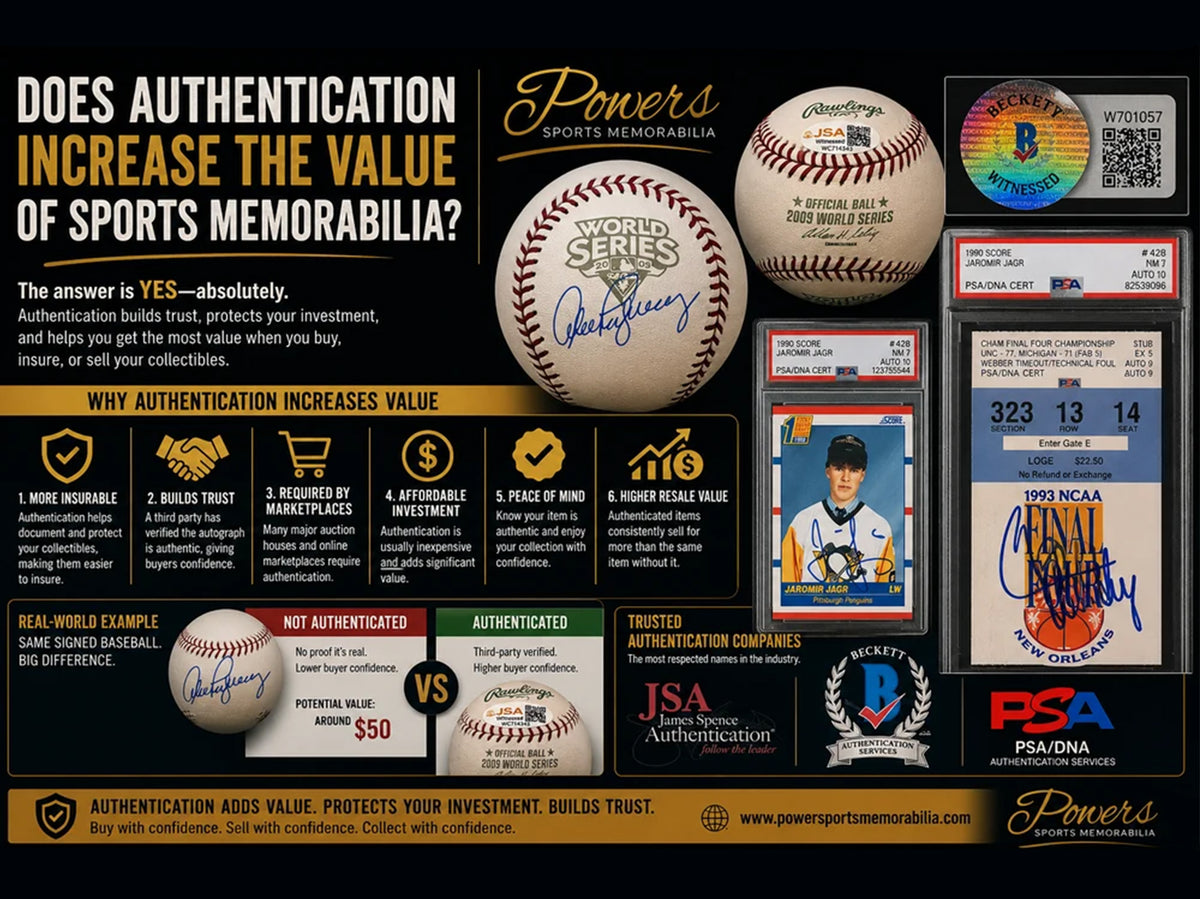
Is the autograph authentic?
Authentication gives collectors confidence that the signature on an item is genuine. Whether you're purchasing an autographed baseball, football helmet, jersey, or trading mcard, understanding how authentication works is one of the most important parts of the hobby.
This guide explains the different types of autograph authentication, the major authentication companies, and how to protect yourself when purchasing signed
memorabilia.
Why Collect?
Add your content for this tab here. You can use bullet lists, links, and paragraphs.
Autograph authentication is the process of verifying that a signature is genuine.
When an autograph has been authenticated, the authentication company confirms that the signature is authentic through either:
- Witness authentication
- Expert examination
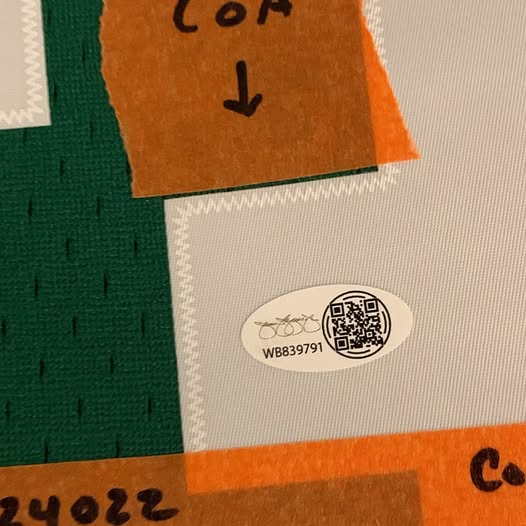
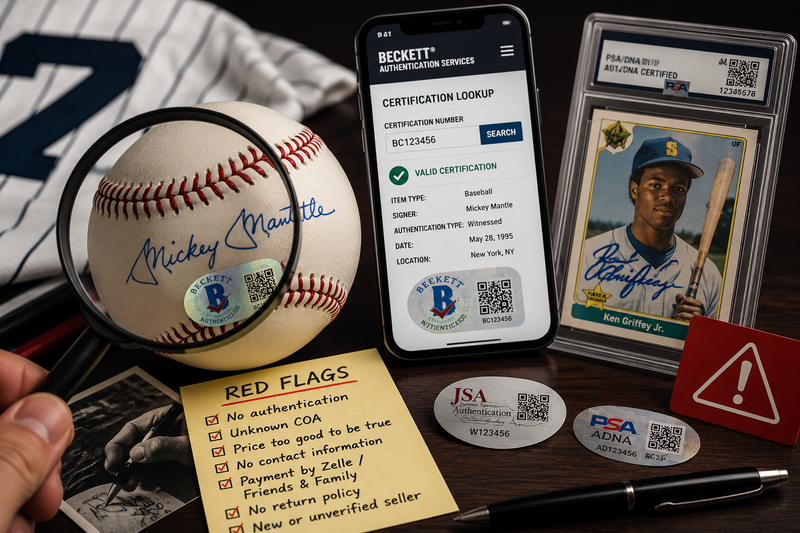
Once authenticated, the item typically receives an authentication sticker with a unique certification number that can be verified online.
Authentication helps provide collectors with confidence that the autograph is genuine.
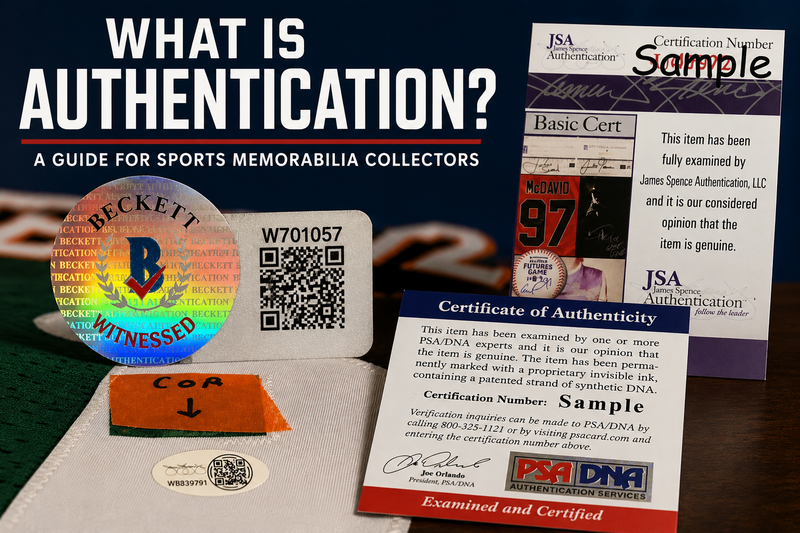
The Three Major Authentication Companies
In the United States, three companies dominate the autograph authentication industry.
PSA Authentication
PSA Authentication is one of the largest and most recognized authentication companies in the hobby.
In addition to autograph authentication, PSA is also the largest sports card grading
company.
Collectors trust PSA because of its long history and extensive autograph database.
Beckett Authentication Services (BAS)
Beckett Authentication Services, commonly called BAS, is another highly respected authentication company.
Beckett regularly attends private and public autograph signings and offers both witness authentication and standard authentication services.
James Spence Authentication (JSA)
JSA has authenticated millions of autographs and is one of the most respected names in the memorabilia industry.
Like PSA and Beckett, JSA offers both witness authentication and expert authentication.
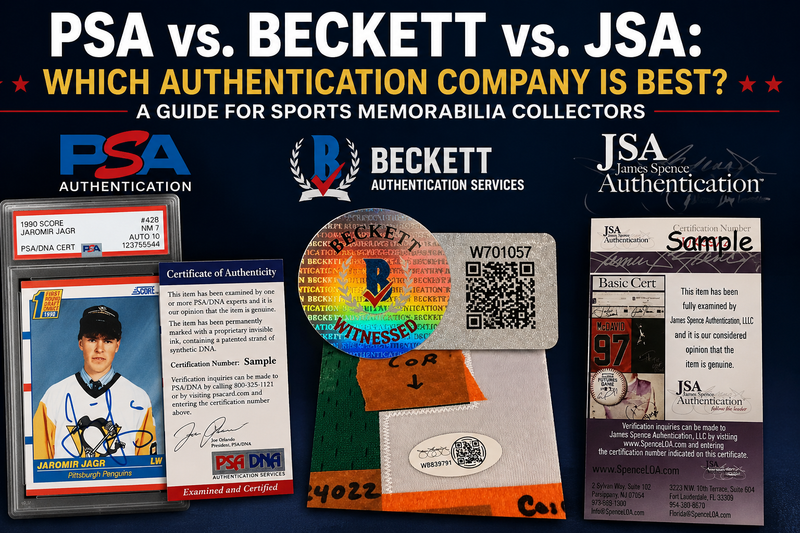
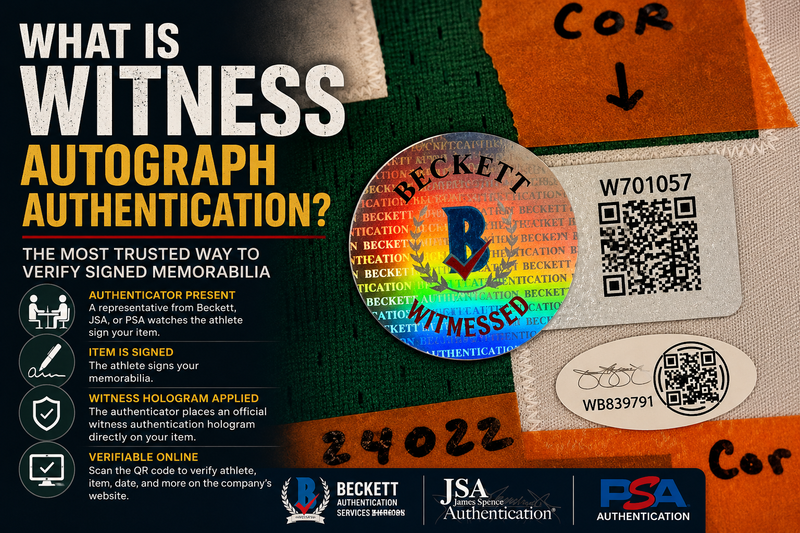
What Is Witness Authentication?
Witness authentication is considered the strongest form of autograph authentication available at an autograph signing.
Here's how it works:
An authentication representative from PSA, Beckett, or JSA is physically present while the athlete signs the memorabilia.
Because they personally witnessed the autograph being signed, they immediately place an authentication sticker directly onto the item.
That sticker indicates the autograph was witnessed by the authentication company.
This is the only way to receive witness authentication during an autograph signing.
What Is Standard Authentication?
Not every autograph is witnessed.
Many collectibles were signed years ago without an authentication representative
present.
In these situations, collectors can submit the item to PSA, Beckett, or JSA for expert
authentication.
Instead of witnessing the signature, trained autograph experts carefully examine it.
They compare numerous characteristics, including:
- Signature speed
- Letter formation
- Slant
- Size
- Pen pressure
- Overall flow
- Comparison to known authentic examples
Based on this examination, they render their professional opinion on whether the autograph is genuine.
Unlike witness authentication, standard authentication is based on expert analysis rather than firsthand observation.
Authentication Stickers
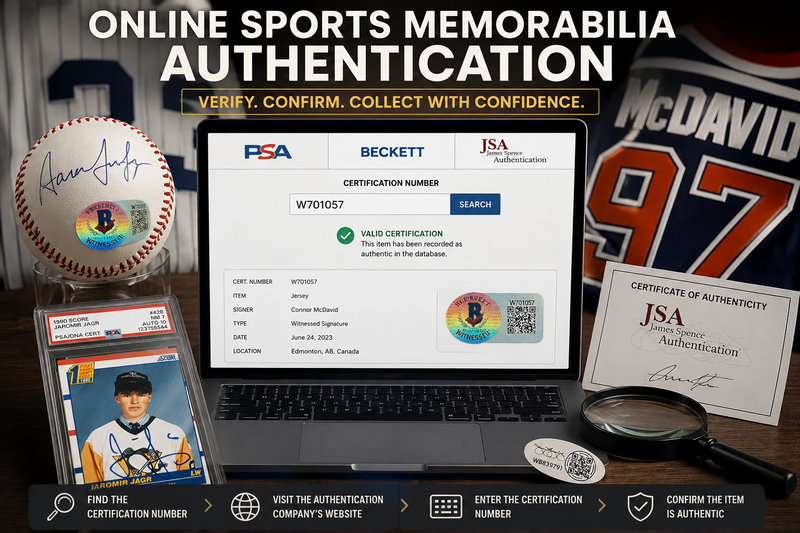
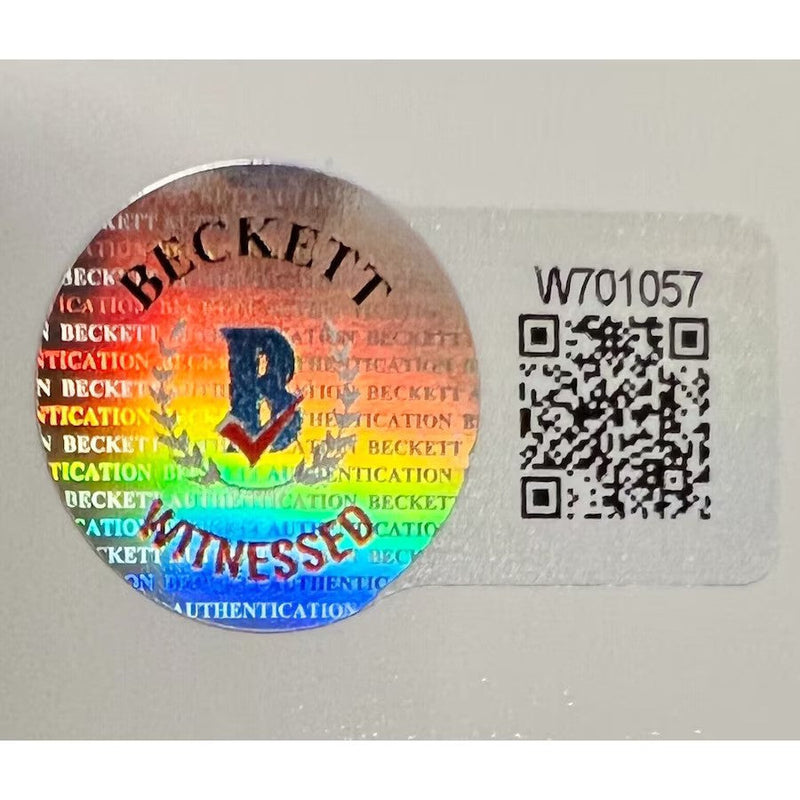
After authentication, the item usually receives an authentication sticker.
The sticker includes:
- A unique certification number
- A QR code (for many modern authentications)
- The authentication company's logo
Each certification number can be searched through the authentication company's website.
This allows collectors to confirm that the authentication record matches the item they're holding.
How to Verify an Authentication Sticker
Today's authentication process is almost entirely digital.
Paper Certificates of Authenticity (COAs) are no longer commonly issued for witness authentication.
Instead, verification is completed online.
Typically, the process looks like this:
- Scan the QR code on the sticker (if applicable).
- Visit the authentication company's website.
- Enter the certification number.
- Confirm the information matches your collectible.
This makes it much easier for collectors to verify their memorabilia.
What Is a Certificate of Authenticity (COA)?
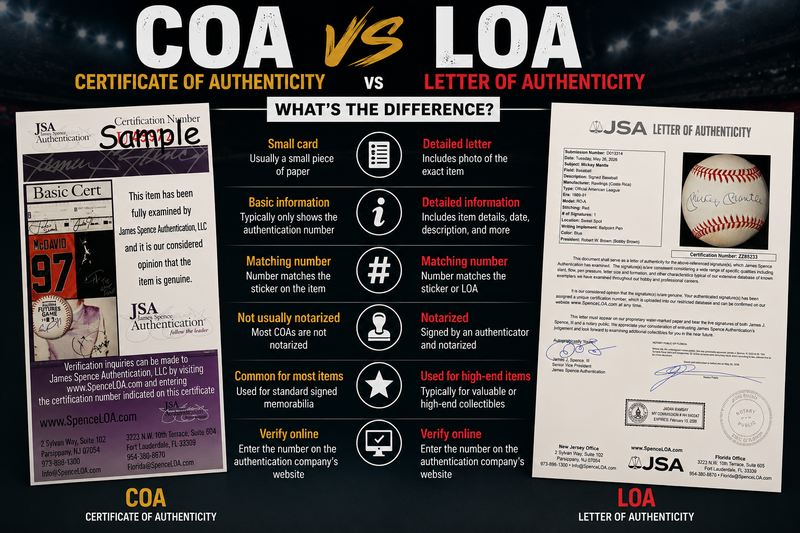
A Certificate of Authenticity, commonly called a COA, is documentation that
accompanies an authenticated collectible.
While paper COAs were once standard, today's authentication companies generally rely on online databases instead.
For most modern witness-authenticated items, the authentication sticker and online
verification serve as the primary proof of authenticity.
What Is a Letter of Authenticity (LOA)?
A Letter of Authenticity (LOA) is more detailed than a standard authentication sticker.
LOAs are generally reserved for higher-value collectibles.
Examples include:
- Babe Ruth signed baseballs
- Historic game-used memorabilia
- Rare vintage autographs
An LOA often includes:
- A photograph of the actual item.
- A detailed description.
- Information about the autograph.
- Authentication findings.
- A unique certification number.
Many collectors appreciate LOAs because they provide additional documentation for significant collectibles.
Can Authentication Stickers Be Faked?
Unfortunately, yes.
Just because an item has an authentication sticker does not automatically mean it's authentic.
Counterfeit authentication stickers do exist.
That's why experienced collectors never rely solely on the sticker.
Instead, they evaluate the entire collectible.
The autograph itself should look consistent with known authentic examples, and the authentication should make sense based on the athlete and the authentication company's records.
Watch for Red Flags
One of the biggest mistakes collectors make is assuming every authentication sticker is legitimate.
Some warning signs include:
- The autograph looks significantly different from known authentic examples.
- The authentication number doesn't verify online.
- The sticker appears altered or damaged.
- The authentication company has no history of witnessing that athlete's signatures during the time claimed.
If something feels wrong, ask questions before purchasing.
Your Cart
Your cart is empty.