


Sports Card Grading Guide
Everything collectors need to know about PSA, Beckett, SGC, CGC, grading standards, population reports, and whether grading is right for your cards.
Sports card grading has become one of the biggest parts of the hobby.
Whether you're buying your first rookie card or preparing a valuable autograph for grading, understanding how grading works can help you make better collecting decisions.
Professional grading does more than assign a number to a card. It authenticates the card, protects it in a sealed holder, gives buyers confidence, and can significantly impact its market value.
Professional grading does more than assign a number to a card. It authenticates the card, protects it in a sealed holder, gives buyers confidence, and can significantly impact its market value.
This guide explains how sports card grading works, the major grading companies, and the terminology every collector should know.
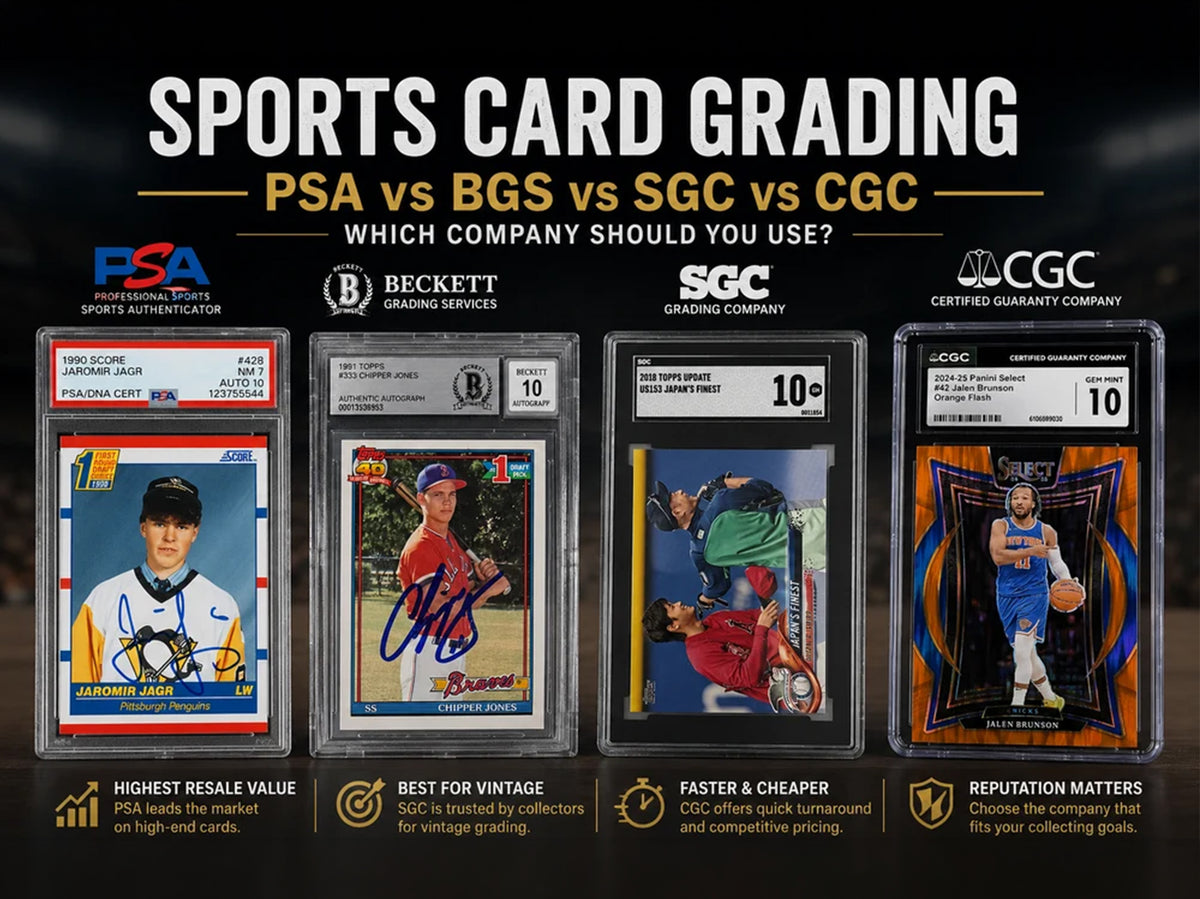
What Is Sports Card Grading?
Sports card grading is the process of having a professional third-party company
evaluate the condition and authenticity of a trading card.
After inspection, the card is sealed inside a tamper-evident plastic holder—commonly
called a slab—with a label showing important information, including:
- The player
- The card set
- The card number
- The assigned grade
- Certification number
A professionally graded card gives collectors confidence in both its authenticity and condition.
Why Do Collectors Grade Cards?
Collectors choose to grade cards for several reasons.
Authentication
Grading companies verify that the card is authentic.
If the card is also autographed, many companies can authenticate the signature as well.
Protection
Once graded, the card is permanently sealed inside a protective holder.
This helps protect it from:
- Scratches
- Fingerprints
- Bending
- Everyday handling
Market Value
Professionally graded cards often sell for more than comparable raw cards because buyers know exactly what they're purchasing.
A PSA 10, for example, is generally more desirable than an ungraded copy because the condition has already been verified.
Buyer Confidence
Grading removes much of the uncertainty when buying and selling cards.
Instead of debating condition, buyers can rely on the professional opinion of the grading company.
The Major Sports Card Grading Companies
Several companies grade sports cards, but four names dominate today's hobby.
PSA (Professional Sports Authenticator)
PSA is the largest and most recognizable grading company in the hobby.
Today, PSA grades more sports cards than any other company.
Collectors often prefer PSA because of:
- Strong brand recognition
- Excellent resale value
- Large online database
- Easy certification lookup
- Extensive population reports
Many collectors specifically build collections of PSA 10 cards because of the consistency and prestige associated with the brand.
PSA is generally considered the industry leader, particularly when resale value is important.
Beckett Grading Services (BGS)
Beckett has been one of the hobby's most respected grading companies for decades.
Many collectors appreciate Beckett's grading history and its detailed subgrades on older slabs.
Beckett continues to grade both modern and vintage cards.
SGC
SGC has long been known for grading vintage cards.
Many pre-war and vintage collectors continue to prefer SGC's distinctive black holders.
CGC Cards
CGC is an independent grading company that has grown significantly in recent years.
Collectors often choose CGC because it offers:
- Competitive pricing
- Faster turnaround times
- Modern slab design
- Autograph authentication through its partnership with JSA
CGC has become an increasingly popular option, particularly for collectors looking for faster service.
Which Grading Company Is Best?
There isn't one correct answer.
All of the major grading companies employ trained professionals and follow established grading standards.
In our experience, the biggest difference isn't necessarily the grading itself.
It's the marketplace.
PSA generally commands the strongest resale values because:
- It's the most recognized brand.
- More collectors pursue PSA-graded sets.
- Buyers are familiar with PSA slabs.
- PSA has graded more cards than anyone else.
That doesn't necessarily mean PSA graders are better than Beckett, SGC, or CGC.
It simply reflects the confidence many collectors have in the PSA brand.
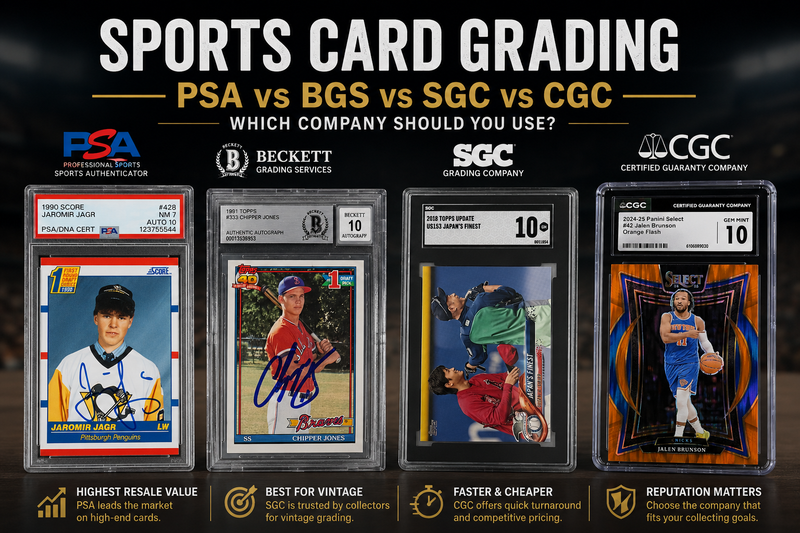
Which Grading Company Is Best?
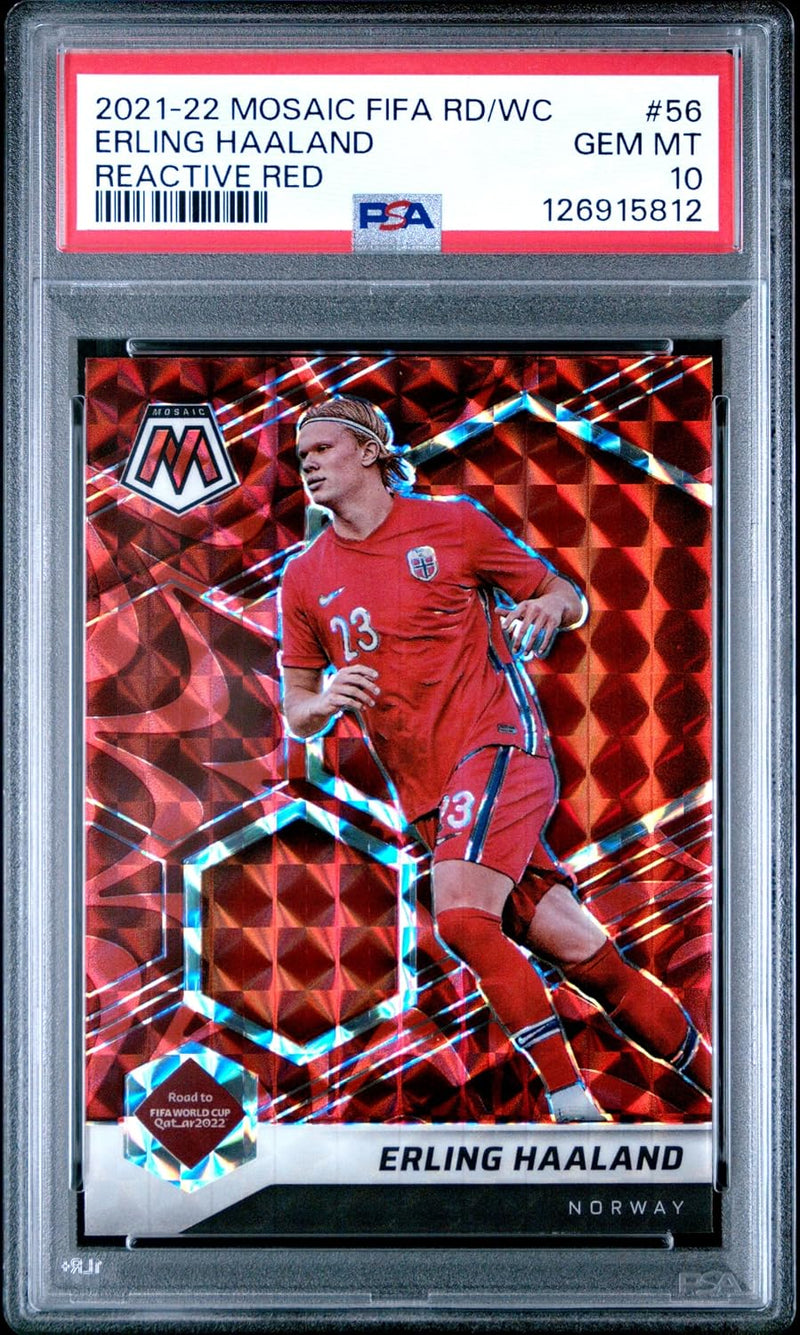
A PSA 10 is the highest numerical grade PSA assigns.
Many people mistakenly believe a PSA 10 means a card is perfect.
It does not.
Instead, it means the card meets PSA's Gem Mint grading standards.
To receive a PSA 10, a card generally needs:
- Sharp corners
- Clean edges with no fraying
- Excellent centering within PSA's tolerances
- A clean surface with minimal or no defects
Even PSA 10 cards may have extremely minor imperfections while still meeting PSA's grading criteria.
Can You Grade Autographs?
Yes.
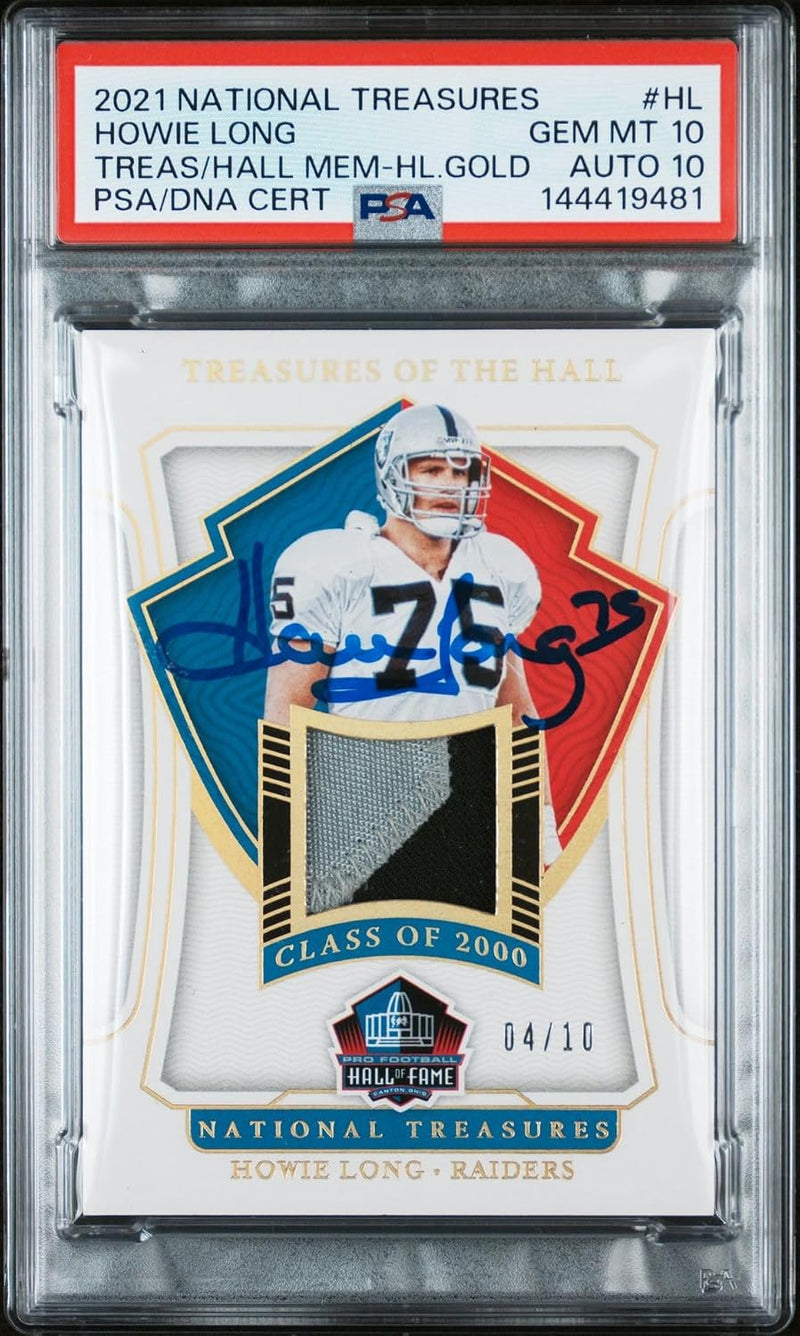
If your trading card has been signed, you can often have both:
- The card graded
- The autograph graded
These are two completely separate grades.
For an autograph to receive a 10, graders typically look for:
- Strong ink coverage
- No skips
- No streaking
- No smudging
- Proper placement
A slab may display:
- Card Grade: PSA 10
- Auto Grade: 10
These grades are evaluated independently.
What Are Population Reports?
A population report tells collectors how many examples of a particular card have been graded.
For example, suppose PSA has graded 1,000 copies of a specific rookie card.
The population report might show:
- PSA 10 — 87
- PSA 9 — 342
- PSA 8 — 411
- PSA 7 — 160
Population reports help collectors understand how difficult a particular grade is to obtain.
Cards with very small PSA 10 populations are often more desirable because fewer high- grade examples exist.

Raw vs. Graded Cards
One of the biggest decisions collectors face is whether to buy raw cards or graded cards.
Raw Cards
A raw card has not been professionally graded.
Advantages include:
- Lower purchase price
- Opportunity to submit for grading
- Great for collectors who enjoy grading themselves
The downside is that condition and authenticity haven't been confirmed by a third party.
Graded Cards
A graded card has been authenticated, evaluated, and sealed in a protective slab.
Advantages include:
- Authentication
- Known condition
- Better protection
- Easier resale
- Increased buyer confidence
Many collectors prefer graded cards because they eliminate much of the uncertainty.
Should You Grade Your Cards?
It depends on your goals.
If you're collecting strictly for personal enjoyment, grading may not always be necessary.
However, grading can be worthwhile if you:
- Plan to resell the card.
- Believe it has a chance to receive a high grade.
- Want authentication.
- Want long-term protection.
- Want to preserve the card's condition.
A card that receives a PSA 10—along with a 10 autograph grade, if signed—can often
be significantly more desirable than the same card in raw condition.
What Is Reholdering?
Over the years, grading companies have updated their holders and labels.
If you own an older slab, you may choose to have it reholdered.
Reholdering keeps the existing grade while placing the card into the company's newest holder and label design.
Collectors often choose this service when:
- The slab becomes scratched.
- The holder is damaged.
- They prefer the newest label design.

What Is a Crack-Out?
A crack-out is exactly what it sounds like.
A collector removes a card from its graded holder.
Common reasons include:
- Attempting to receive a higher grade through resubmission.
- Sending the card to a different grading company.
- Having the card autographed before grading it again.
Because the original holder must be broken open, crack-outs should be done carefully to avoid damaging the card.
Your Cart
Your cart is empty.